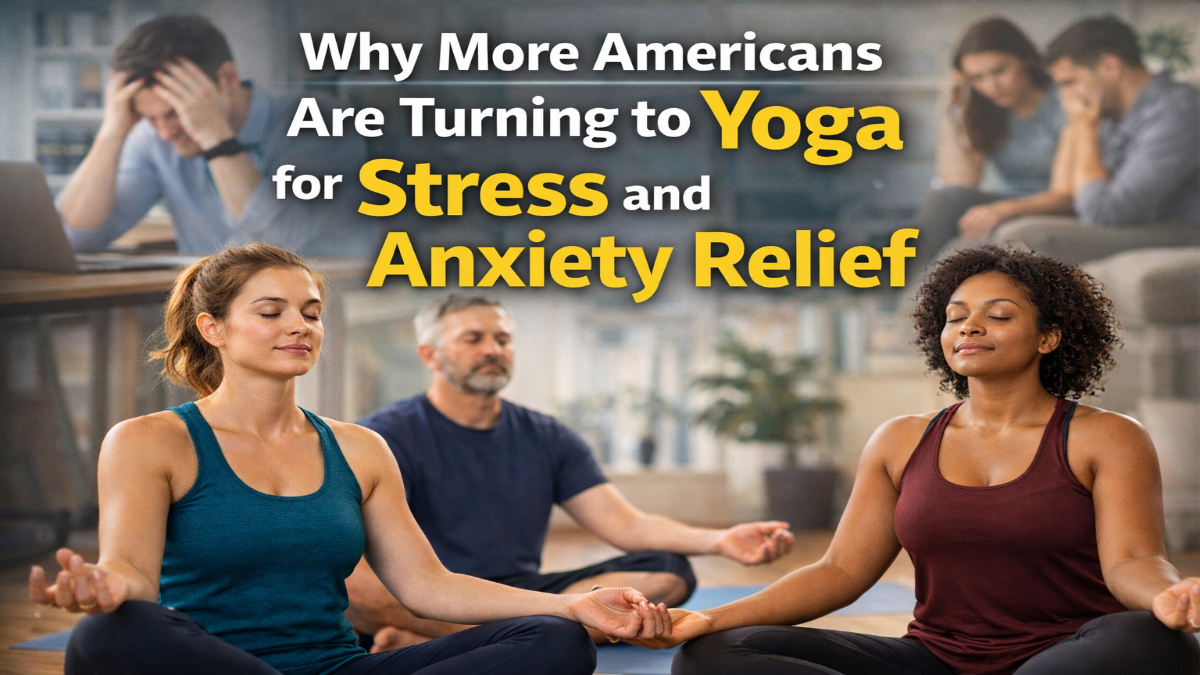
Stress and anxiety are no longer occasional problems in the United States—they’ve become part of daily life for millions. From demanding jobs and financial pressure to nonstop screen time and poor sleep, Americans are feeling mentally overwhelmed like never before. As a result, yoga is rapidly emerging as one of the most trusted natural solutions for stress and anxiety relief across the U.S.
Stress & Anxiety: A Growing Crisis in America
Mental health experts say stress-related disorders are rising across all age groups in the U.S. Office workers report burnout, students struggle with anxiety, and even retirees face emotional fatigue and sleep disorders.
While therapy and medication remain important options, many Americans are now searching for affordable, daily, and natural ways to calm their minds—and yoga fits perfectly into that need.
Why Yoga Is Gaining Popularity in the U.S.
Yoga is no longer seen as just stretching or a spiritual practice. In America, it has evolved into a science-backed wellness tool that doctors, therapists, and fitness experts increasingly support.
Here’s why Americans are choosing yoga:
- No expensive prescriptions or long-term costs
- Can be practiced at home or work
- Improves mental and physical health together
- Backed by medical and psychological research
Yoga offers something modern life often lacks: a pause button for the nervous system.
How Yoga Helps Reduce Stress and Anxiety
U.S. health professionals explain that yoga works directly on the mind–body connection. Slow movements, controlled breathing, and mindfulness help calm the brain’s stress response.
Key mental health benefits:
- Lowers cortisol (stress hormone)
- Improves sleep quality
- Reduces panic and racing thoughts
- Enhances emotional balance
- Boosts focus and mood naturally
Regular yoga practice trains the body to respond calmly—even during stressful situations.
Yoga vs Medication: Why Many Americans Prefer Yoga First
Medication can be effective, but it’s not always the first choice anymore. Many Americans worry about side effects, dependency, and long-term use.
Yoga, on the other hand:
- Has minimal side effects
- Builds long-term resilience
- Encourages self-awareness
- Supports overall wellness
Doctors often recommend yoga as a first step for mild to moderate stress and anxiety, alongside lifestyle changes.
Popular Yoga Styles in the U.S. for Anxiety Relief
Different forms of yoga are trending across America, especially for mental health:
- Hatha Yoga – Gentle and beginner-friendly
- Restorative Yoga – Deep relaxation and stress recovery
- Yin Yoga – Targets emotional tension
- Chair Yoga – Ideal for seniors and office workers
Hospitals, universities, and corporate offices in the U.S. are even adding yoga programs to support mental well-being.
Who Benefits the Most from Yoga?
According to U.S. wellness experts, yoga is especially helpful for:
- Busy professionals facing burnout
- College students with exam stress
- Parents managing emotional overload
- Seniors dealing with sleep and anxiety issues
Yoga doesn’t require explaining your problems—it helps your body release stress naturally.
Is Yoga a Replacement for Therapy?
Mental health professionals are clear: yoga is not a substitute for professional therapy in severe cases. However, for everyday stress and anxiety, yoga is proving to be a powerful, accessible tool.
Many Americans now follow a balanced approach—therapy when needed, yoga daily.
Why This Trend Is Accelerating in the U.S.
- Rising mental health awareness
- High healthcare costs
- Work-from-home stress
- Easy access to online yoga classes
- Doctor-backed recommendations
Yoga has become part of mainstream American healthcare and lifestyle.
Final Thoughts
As stress and anxiety continue to rise, Americans are choosing solutions that are simple, affordable, and effective. Yoga offers all three. That’s why more people across the U.S. are rolling out their mats—not just for fitness, but for peace of mind.